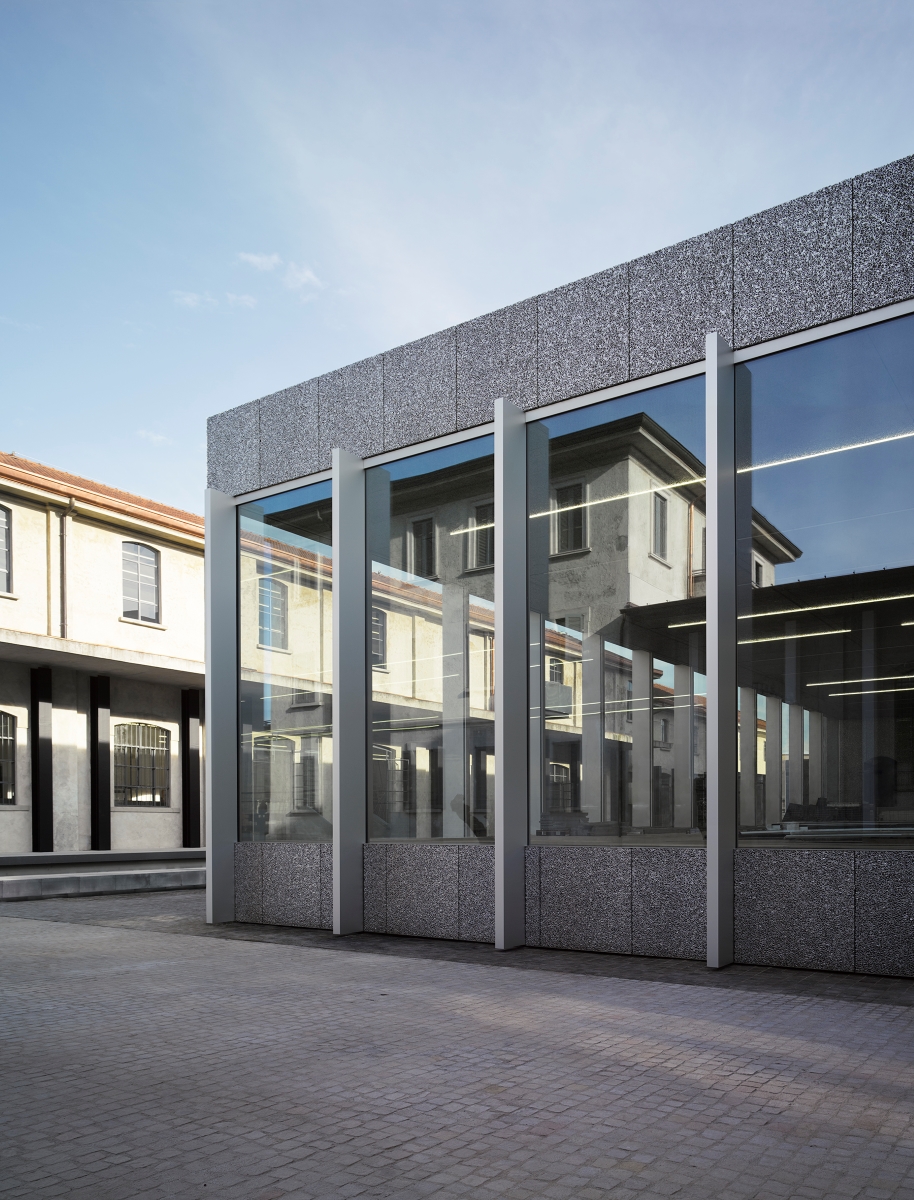
The research project “Global Antiquity”, curated by Salvatore Settis and Anna Anguissola with the collaboration of Chiara Ballestrazzi, will unfold in a set designed by Rem Koolhaas and AMO/OMA for the Podium, the main exhibition space at the Milan venue.
This exhibition offers an unexpected perspective on the interactions between Mediterranean cultures and those of Eastern Africa and Asia over a broad chronological span (ca 600 BC–ca 900 AD). Each of the objects brought together from around the globe becomes an actual storyteller and illustrates a highly complex dynamic at play. For instance, the presence of Greco-Roman artifacts in China or Indian objects in Europe can be traced to a dense, long-lasting web of relationships connecting different continents. Cultural exchanges are narrated by highlighting their reciprocity and, at times, their symmetry. Accordingly, the interaction between different parts of the world is articulated not along linear and univocal paths, but rather as a fluid, ever-evolving network of polygonal routes.
An underlying theme of the project resonates powerfully in today’s debate by examining the dialectical relationship between the concepts of “globality” and “globalization.” As explored in the exhibition, “globality” is more linked to the ancient world and follows horizontal, osmotic, and reciprocal dynamics. In contrast, “globalization” refers to a modern or contemporary system defined by vertical, top-down processes driven by economic and political forces at the global scale.